
10 Best Desert Recovery Equipment Items for Off-Roading
Essential Self-Extraction Gear & Tactical Rigging Tools for Dubai Dunes
Hitting the shifting sand dunes of the UAE desert is an unforgettable adventure, but entering without the proper gear is a major safety risk. Whether you are driving a lightweight crossover or a modified heavy 4x4 SUV, having the right gear can mean the difference between a quick self-extraction and a stressful, long-distance emergency rescue call.
Introduction
Driving through the beautiful, shifting sand dunes of Dubai offers an unmatched sense of outdoor freedom. However, loose sand behaves completely differently than asphalt roads. Traction can disappear instantly under your tires, and even highly experienced off-roaders can easily find their vehicles stuck or high-centered on an unstable dune ridge line.
When your vehicle loses forward momentum and stalls, having the best desert recovery equipment stored in your cargo bay is crucial. Packing the right gear protects your vehicle's structural components and ensures the safety of your passengers during an extraction attempt.
This comprehensive guide breaks down the top ten most effective, field-tested off-road recovery tools every desert traveler should carry. We will analyze the physics behind each item, outline safe operation methods, and show you how these professional-grade tools help you manage off-road incidents safely.
The Best Desert Recovery Equipment
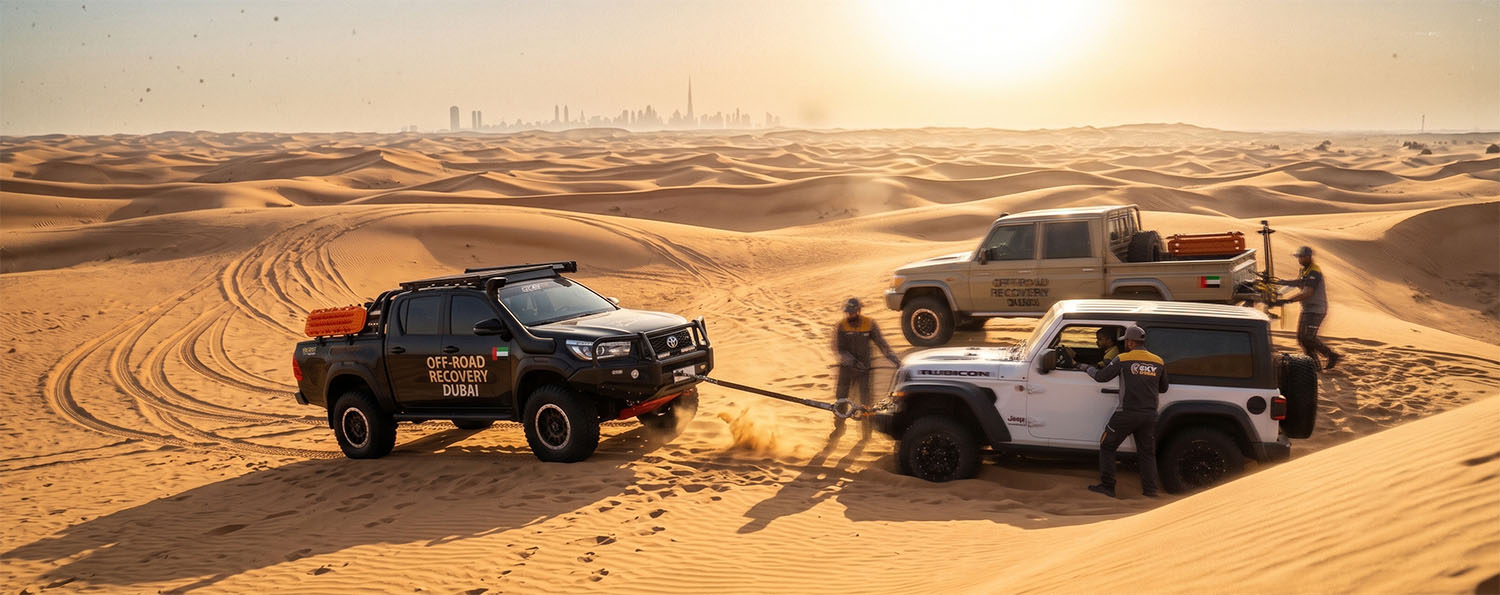
To help you prepare your off-road kit properly, our senior recovery technicians have reviewed and organized the most reliable desert self-extraction tools into a clear, dual-column design:
1. Heavy-Duty Synthetic Winches
A vehicle-mounted winch provides incredible pulling power when you are stuck deep in the dunes. We highly recommend using lightweight synthetic winch lines instead of old-fashioned steel cables. Synthetic lines store far less kinetic energy, meaning they won't whip dangerously if a link breaks under heavy load. A quality winch setup is an essential item for any deep desert expedition.
2. Kinetic Recovery Ropes
Unlike standard rigid tow straps, kinetic recovery ropes are designed to stretch up to 30% of their length under tension. This stretching action absorbs the harsh energy of the pull and stores it as kinetic force, using a smooth, elastic snap to pop the buried vehicle out cleanly. This smooth pull drastically reduces structural strain on both vehicles' chassis rails.
3. Synthetic Soft Shackles
Traditional heavy steel D-shackles are becoming obsolete in modern off-road circles. If a recovery point fails under high tension, a steel shackle can tear free and become a deadly metal projectile. Synthetic soft shackles are made from high-strength fiber loops that match or beat steel load ratings, providing a much safer, non-marring link for your rigging lines.
4. Rigid Traction Boards
Lightweight, high-impact polypropylene traction boards are an absolute must-have for solo travelers. When your tires spin and lose traction, you simply shovel sand away and wedge the grooved boards tightly beneath your tires. The built-in plastic cleats grab your tire tread instantly, giving your vehicle a solid surface to drive up and out of the pocket.
5. Exhaust-Inflated Air Jacks
Standard factory bottle jacks sink uselessly into loose sand, but a heavy-duty exhaust-inflated air jack provides a massive, stable footprint on soft ground. You simply lay the tough rubber bag flat beneath your vehicle's frame and connect the hose to your exhaust pipe. As it fills, it lifts your vehicle frame cleanly, allowing you to quickly fill sand underneath the tires.
6. Rapid Tire Deflators
Lowering your tire pressure is the absolute #1 way to avoid getting stuck in soft sand. Standard valve pressing can take a long time, but a brass rapid deflator removes the inner valve core safely to drop your pressure down to off-road levels within seconds. This widens your tires' footprint, letting your vehicle float easily over loose sand layers.
7. High-Volume Air Compressors
Dropping your tire pressure down is great for sand traction, but driving back onto the highway with low tires can cause rapid heat build-up and tire damage. A high-volume, battery-clamped portable air compressor is vital to air up your tires back to factory highway specifications right at the desert gate.
8. Heavy T-Handle Shovels
Never underestimate the value of a solid, long-handled steel shovel. Before attempting any winch pull or traction board extraction, you must clear packed sand away from your tires, differential cases, and lower chassis rails. Removing this sand relieves the intense suction effect, making the physical extraction significantly easier.
Crucial Safety & Communication Accessories
Beyond the heavy extraction gear, keeping your crew safe and maintaining communication links in remote areas requires a few more vital gear items:
9. High-Visibility Dune Flags
Because desert terrain features steep drops and deep bowls, oncoming vehicles cannot see you over sharp crests. Mounting a bright, 3-meter fiberglass dune flag to your bumper gives other drivers a clear visual warning of your position before they crest a hill, preventing high-speed off-road collisions.
10. Satellite Messengers & Radios
Cellular network coverage disappears quickly once you travel deep into interior desert spaces. Carrying a dual-band UHF/VHF radio or a dedicated satellite GPS messenger ensures you can maintain continuous communication loops with your convoy members, or contact emergency support channels if a medical emergency arises.
The Importance of Professional Grade Equipment
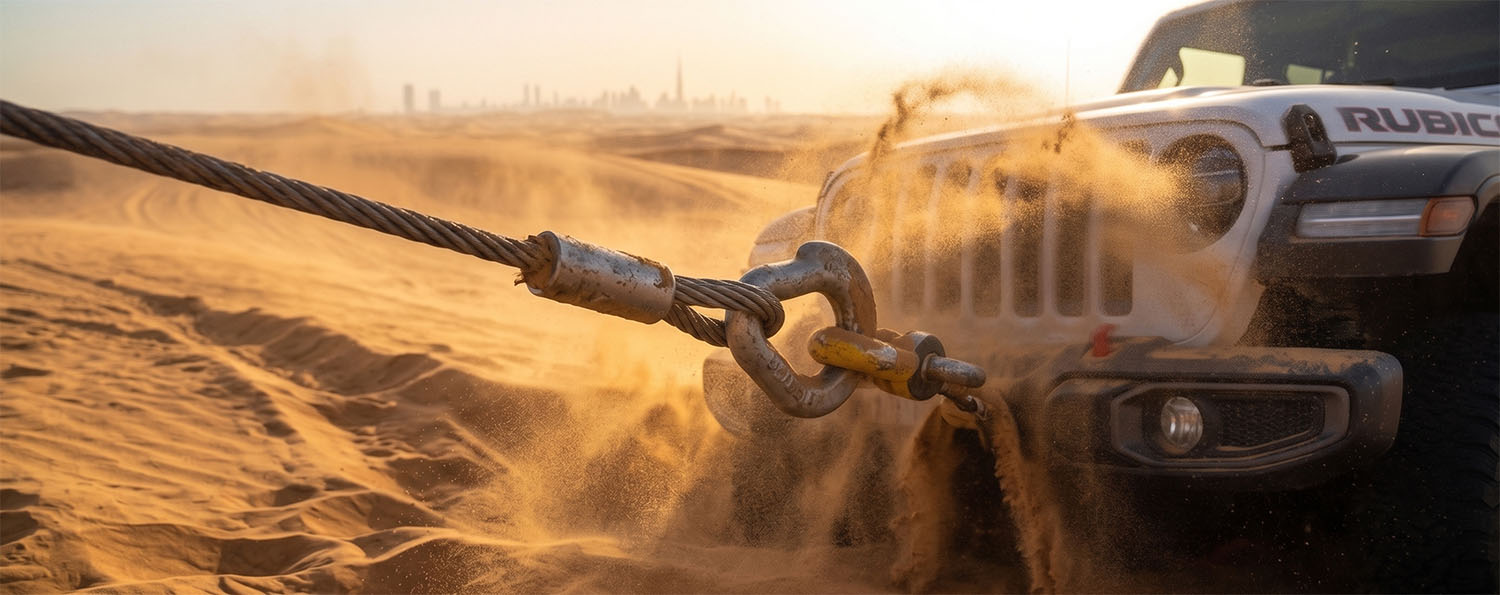
Using cheap, unrated recovery gear is a major risk that frequently leads to snapped hooks, broken kinetic lines, or bent vehicle frames. Professional extraction teams like SkyTyre invest heavily in premium, independently certified off-road tools. Carrying properly rated gear ensures that your equipment can handle the immense structural loads required to pull a 3-ton vehicle out of deep sand suction fields safely.
If you don't carry this specialized gear or encounter an extraction scenario beyond your tools' capacity, attempting self-recovery can easily cause serious drivetrain damage. In these complex situations, dropping your GPS pin to our specialized 4x4 recovery Dubai dispatch unit is the safest way to guarantee a damage-free rescue.
Frequently Asked Questions
Stuck in the Desert with Inadequate Gear?
Don't risk damaging your vehicle's suspension or transmission with incorrect recovery methods. Contact SkyTyre for fast, professional off-road extraction anywhere in Dubai.